

Showing all 21 resultsSorted by latest




Industrial Ultrasonic Acoustic Imagers
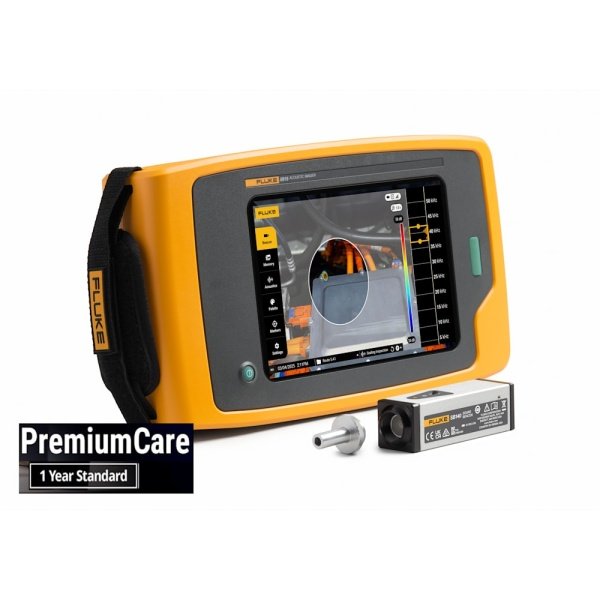
Visualize hidden sound anomalies and isolate high-frequency gas leaks effortlessly across your facility floor using our professional selection of high-accuracy acoustic-imagers. Engineered specifically for plant millwrights, facility automation engineers, and utility maintenance crews, these advanced sound-wave imaging workstations convert compressed air turbulence into real-time visual displays. Find your required microphone array density, target frequency tracking scales, and integrated software analytics to log precise structural sound matrices, stop grid efficiency losses, and satisfy strict industrial safety standards.
Acoustic Imager Sound-Wave Mechanics & Frequency Specifications
Relying on slow, single-point ultrasonic sniffing tools inside busy manufacturing asset rooms triggers delayed leak detections, unexpected utility cost spikes, and broken quality assurance certifications. To secure smooth, trace-legal visual gas line validation across severe processing workshops, ensure your active technical procurement specifications match these five critical sensor attributes and signal processing filters:
- High-Density MEMS Microphone Arrays: Precision circular clusters containing dozens of micro-machined sound sensors built to capture faint acoustic pressure waves cleanly.
- Broad Sonic-to-Ultrasound Tracking Scales: Advanced internal digital signal processing matrices calibrated to scan smoothly from standard 2kHz audible frequencies up to high-speed 100kHz channels.
- Real-Time Sound Visual Overlays: Onboard software configurations that automatically overlay a color-coded sound intensity grid onto live video display screens for instant localization.
- Automated Gas Flow Rate Quantification: Integrated internal firmware that instantly converts distance metrics and sound decibels into real-time cubic feet per minute (CFM) air loss sheets.
- Rugged Double-Molded Field Enclosures: Impact-resistant outer body shells carrying Broad thermal operating limits and high-contrast sunlight-readable digital screens for grueling workshops.
Frequently Asked Questions
Q: How does an industrial acoustic imager visually display a compressed air leak?
A: Moving air leaks generate high-frequency micro-turbulence; the imager’s microphone array calculates the sound’s origin and overlays a visual color-coded heat map onto a digital screen.
Q: What is the primary benefit of a multi-microphone MEMS array over a single-sensor probe?
A: A multi-microphone array can scan an entire factory wall or overhead pipeline network from a distance instantly, saving hours of manual spot-checking with hand tools.