

Showing 1–28 of 31 resultsSorted by latest


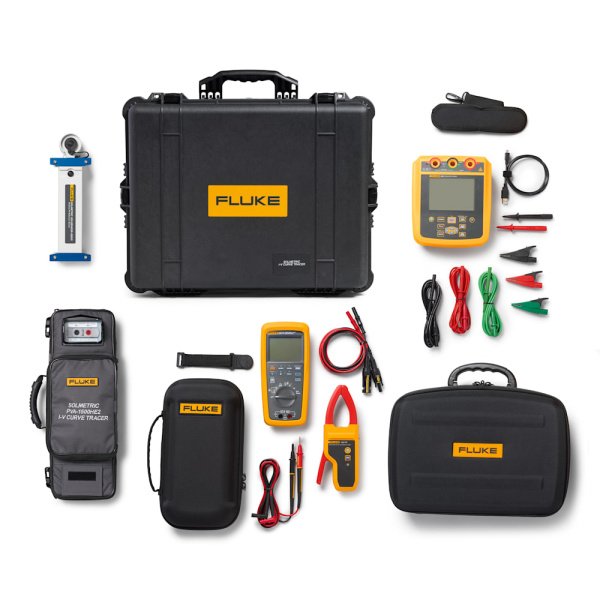


Precision Photovoltaic Solar Analyzers
Analyze photovoltaic system peak efficiency and streamline your solar grid commissioning audits with our professional collection of high-accuracy solar-analyzers. Optimized for solar farm engineering contractors, commercial roofing installers, and green energy maintenance crews, these advanced test instruments deliver real-time diagnostic metrics on string performance. Find your required I-V curve tracing scales, ambient solar irradiance sensor configurations, and internal logging memory capabilities to isolate weak modules, check inverter boundaries, and satisfy global engineering safety standards.
Solar Analyzer I-V Curve Tracing & Environmental Metrics
Gathering inaccurate photovoltaic metrics or ignoring environmental irradiance variables leads to hidden panel performance decay, unpredicted system output drops, and broken utility financial margins. Filter our active inventory of field testing instrumentation through these five foundational hardware capabilities and automated sensor features to choose the perfect tool asset setup for your property audits:
- Automated I-V Curve Tracing Microprocessors: Advanced internal circuitry engineered to automatically sweep module voltage and current scales to map maximum power points (Pmax) cleanly.
- Wireless Remote Irradiance Sensors: Independent solar metrology pods that log real-time sun lux metrics and panel temperatures simultaneously to normalize data sheets.
- High-Voltage String Array Capacities: Rugged diagnostic processing engines capable of testing modern high-efficiency solar loops stretching up to 1000V or 1500V safely.
- Extended Flash Memory Diagnostic Logs: Extended internal non-volatile data storage modules built to log thousands of time-stamped array strings smoothly during field workflows.
- Tamper-Proof Analytical Report Compilations: Built-in secure processing memory software that compiles official encrypted data sheets required for client warranty sign-offs.
Frequently Asked Questions
Q: Why is an independent irradiance sensor mandatory when executing solar I-V curve tracing?
A: Solar module output changes based on sun intensity; a wireless irradiance meter logs real-time sun metrics so software can accurately calculate standard test condition (STC) values.
Q: What does a step or staircase deformation reveal on a solar module I-V curve display?
A: A step shape indicates internal panel mismatching or localized shading anomalies, warning technicians that a cell is bypassing current or experiencing physical diode damage.